Sawal Acharya
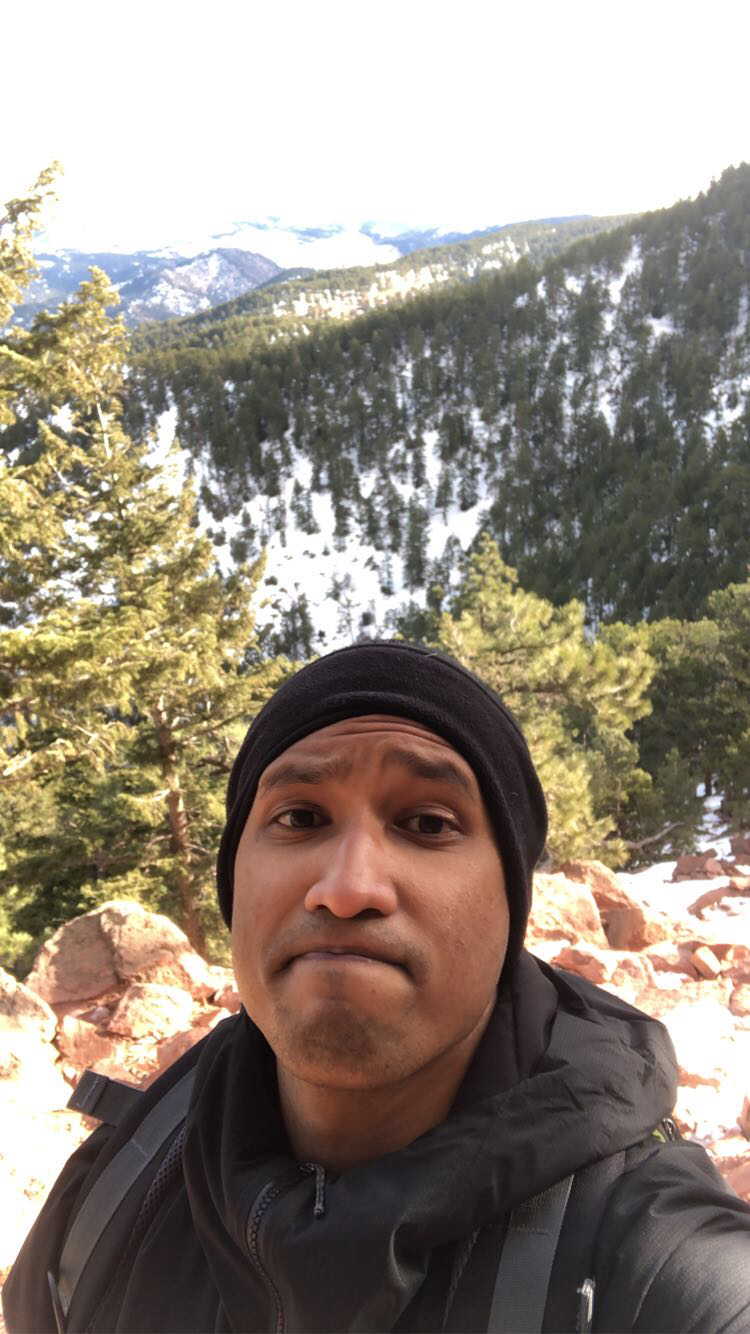
About: I am a recent MS graduate from the Institute for Computational and Mathematical Engineering (ICME) at Stanford University. Currently, I am developing models for understanding cancer recurrences and treatment efficacies under the mentorship of Dr. Sylvia Plevritis. I also work with Dr. Zhijing Jin of the University of Toronto on projects at the intersection of causal inference and Large Language Models. Outside of studies, I enjoy hiking in the mountains, running, biking, and playing and watching football (soccer).
Previously, I developed Bayesian inference algorithms for describing microbial population dynamics and stable optimization schemes based on control theory principles.
I completed my undergraduate studies at Columbia, where I studied Applied Mathematics and pursued research in economics.
Research Interest: My research spans machine learning, stochastic modeling, and causal inference. In particular, I am interested in developing interpretable data-driven models for understanding temporal processes, with a focus on biomedicine. To this end, I am excited about quantifying uncertainties and/or establishing statistical guarantees for models, both of which are integral to clinical decision-making processes.
Publications
Peer-reviewed Journal Publications
-
[1] T. E. Gibson, S. Acharya, A. Parashar, J. E. Gaudio, and A. Annaswamy, "On the stability of gradient descent with second order dynamics for time-varying cost functions," Transactions on Machine Learning Research, 2025, Journal-to-Conference Certification.
-
[2] T. E. Gibson, Y. Kim, S. Acharya, D. E. Kaplan, N. DiBenedetto, R. Lavin, B. Berger, J. R. Allegretti, L. Bry, and G. K. Gerber, "Learning ecosystem-scale dynamics from microbiome data with mdsine2," Nature Microbiology, vol. 10, no. 10, pp. 2550–2564, 2025.
-
[3] Y. Kim, C. J. Worby, S. Acharya, L. R. van Dijk, D. Alfonsetti, Z. Gromko, P. N. Azimzadeh, K. W. Dodson, G. K. Gerber, S. J. Hultgren, A. M. Earl, B. Berger, and T. E. Gibson, "Longitudinal profiling of low-abundance strains in microbiomes with chronostrain," Nature Microbiology, vol. 10, no. 6, pp. 1551–1551, 2025.
Peer-reviewed Workshops
-
[4] S. Acharya, T. J. Zhang, A. Kim, A. Haghighat, S. Xianlin, R. B. Shrestha, M. Mordig, F. Danisman, C. Jose, Y. Qi, P. Cobben, B. Schölkopf, M. Sachan, and Z. Jin, "Causcibench: Assessing LLM causal reasoning for scientific research," in NeurIPS 2025 Workshop on CauScien: Uncovering Causality in Science, 2025.
-
[5] V. Verma, S. Acharya, S. Simko, D. Bhardwaj, A. Haghighat, D. Janzing, M. Sachan, Z. Jin, and Y. Yang, "Causal AI scientist: Facilitating causal data science with large language models," in NeurIPS 2025 AI for Science Workshop, 2025.
-
[6] Y. Kim, S. Acharya, D. Alfonsetti, G. Gerber, B. Berger, and T. E. Gibson, "Chronostrain: Sequence quality and time aware strain tracking with shotgun metagenomic data," in ICML Workshop on Computational Biology, 2020.
Preprints
-
[7] T. E. Gibson and S. Acharya, Regret analysis: A control perspective, 2025. arXiv: 2501.04572.
Working Papers
-
Chandra Bhandari, Sawal Acharya. Do Civil Wars Influence Voter Participation? A Case Study from Nepal.
Teaching Experience
- Course Assistant, CME 106: Introduction to Probability and Statistics for Engineers, Summer 2024. Stanford University.
- Teaching Assistant, MATH 51: Linear Algebra and Differential Calculus of Several Variables, Autumn 2023 and Winter 2024. Stanford University.